
When a storm rips through Oswestry and leaves your roof damaged, waiting around is not an option. Water finds its way in fast, and what starts as a small drip can turn into a soaked ceiling within hours. We put together this guide to help you understand exactly what steps to take when your roof is damaged and time is against you.
Why emergency roof repair Oswestry situations need quick action
Roofs are built to handle a lot, but they are not invincible. High winds, heavy rain, and falling branches can all cause sudden damage that needs sorting straight away. The longer damaged tiles, cracked flashing, or torn felt are left alone, the more water gets into your home. This can lead to soggy insulation, damaged ceilings, and even problems with electrics if water reaches the wrong places.
Oswestry sits close to the Welsh hills, which means the weather here can turn quickly. One minute it is calm, the next you have gusts strong enough to lift roof tiles clean off. This is why local homeowners need to know the warning signs of roof damage and have a plan ready for when things go wrong.
Getting a professional out quickly is always the safest route. Our team offers fast and reliable roof repair across the area, so help is never far away when you need it most.
Spotting the signs before things get worse
Roof damage does not always announce itself with a leak straight through your ceiling. Sometimes the clues are much smaller, and catching them early can save you a great deal of stress and money.
What to look out for
Watch for tiles lying in your garden or driveway after a windy night. Check your loft for damp patches, especially around chimneys and roof windows, since these are common weak points. Look at your gutters too. If they are overflowing or sagging, that can be a sign of a bigger problem above them.
Staining on your ceiling, a musty smell in upstairs rooms, or daylight showing through your loft roof are all red flags. None of these should be ignored, even if they seem minor at first. A small gap can let in far more water than you would expect, particularly during heavy Welsh Borders rainfall.
If you notice any of these signs, booking someone in quickly to stop water damage before it spreads is a smart move rather than hoping the problem fixes itself.
What to do straight away when damage happens
The first few hours after you spot roof damage matter a lot. Staying calm and following a few simple steps can make a real difference to how much damage your home ends up with.
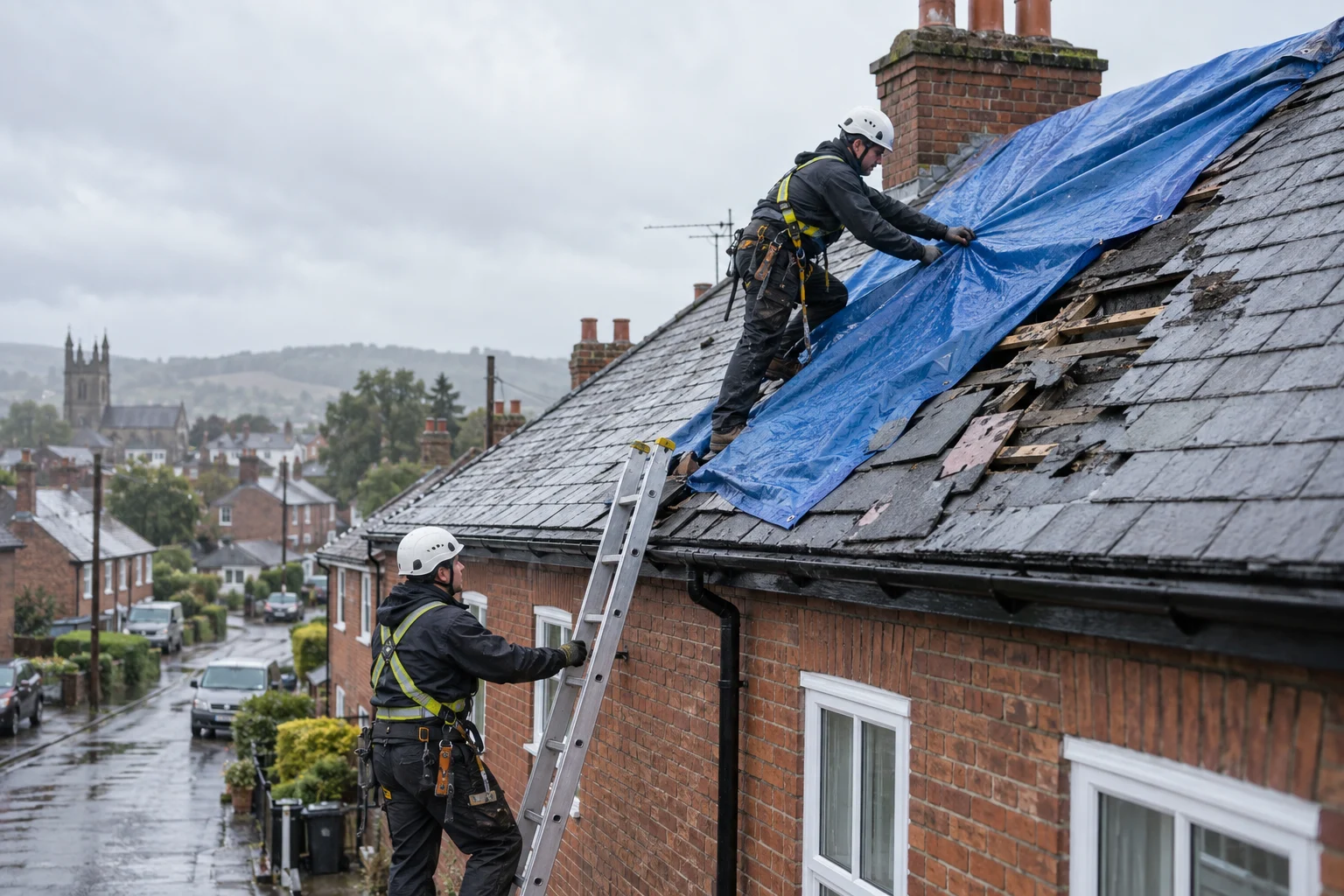
Start by moving anything valuable away from the area where water is coming in. Buckets and towels can catch drips while you wait for help, and it is worth placing a tarp or plastic sheeting over furniture nearby just in case. Never climb onto your roof yourself, especially in wet or windy weather. Roofs become slippery and unstable fast, and falls are one of the most common causes of serious injury during storm clean-up.
Take photos of the damage from a safe distance, both outside and inside your home. These will help enormously if you need to make an insurance claim later. Once you are safe, get in touch with a roofing team you trust. Choosing someone who understands the importance of working safely at height matters just as much as speed. Our guide on finding a safe and professional roofer explains what to look for when you need help urgently.
Temporary fixes that actually help
While you wait for a professional to arrive, there are a handful of things you can safely do from the ground or inside your loft to limit the damage.
Simple steps anyone can take
If water is dripping through a light fitting, switch off the electricity to that circuit straight away. Water and electrics are a dangerous mix, so this step should never be skipped. Inside the loft, you can sometimes redirect a small leak using a bucket placed directly under the drip, or by gently pushing a length of string from the leak into the bucket to guide the water rather than let it splash everywhere.
Outside, if it is safe to do so from ground level, clear any obvious blockages from gutters near the damaged area. Blocked gutters make leaks worse because water has nowhere to go except back up under the tiles. Avoid attempting any repairs on the roof itself. Emergency tarps and temporary tile fixes are jobs for trained roofers who have the right equipment and training to work safely at height.
Choosing the right team for emergency roof repair Oswestry homeowners can rely on
Not every roofing company offers a genuine emergency service, so it pays to know who to call before disaster strikes rather than searching in a panic during a storm.
Look for a team with real experience across different property types, since older Oswestry homes often have different roofing needs compared with newer builds. A good roofer should be happy to explain what they are doing and why, rather than rushing through the job without any communication. Checking reviews from other local homeowners is also a sensible step, as is confirming that the company carries proper insurance.
Our team provides roofing services for homes across the region, and we understand how stressful sudden damage can feel. We aim to get someone out to assess the situation quickly, patch up urgent problems, and talk through longer term repair options once the immediate danger has passed.
Preventing the next roof emergency
Once the immediate crisis is dealt with, it is worth thinking about how to avoid a repeat situation. Most roof emergencies are not completely random. They tend to happen because small issues were left unchecked until a storm pushed them over the edge.
Loose tiles, cracked flashing, and worn seals around chimneys or roof windows are often visible well before they cause a full leak. Booking in a roof inspection to protect your home once or twice a year gives a trained eye the chance to spot these issues while they are still cheap and easy to fix.
Regular maintenance also plays a big part in keeping your roof strong through Oswestry’s changeable weather. Simple jobs such as clearing moss, checking pointing around chimneys, and replacing worn seals can be done as part of a routine visit. Our page on dealing with small roof issues early covers some of the easy wins that stop minor wear from turning into a costly emergency later on.
FAQs
How quickly should I get help after noticing roof damage?
As soon as possible. Water damage spreads fast once it gets past your roof covering, so calling a roofer within the same day, or immediately during heavy rain, gives you the best chance of limiting harm to your home.
Is it safe to go onto my roof myself after a storm?
No, this is not something we would recommend. Roofs can be unstable after storm damage, and wet or windy conditions make falls far more likely. Leave any work at height to trained professionals with the right safety equipment.
Will my home insurance cover emergency roof repairs?
Many policies do cover storm damage, though this varies between providers. Taking clear photos of the damage as soon as you spot it and keeping receipts from any temporary repairs will help support a claim.
How can I tell if my roof needs a full repair or just a small fix?
This usually depends on how widespread the damage is and how old your roof covering is already. A trained roofer can assess this properly, checking not just the visible damage but also nearby tiles, flashing, and felt that might be affected too.
Dealing with sudden roof damage can feel overwhelming, but knowing what steps to take makes all the difference. Spotting the warning signs early, taking sensible precautions while you wait for help, and choosing a trustworthy team are the three things that matter most when time is tight.
Evolution Roof Solutions is here whenever you need fast, reliable support, so get in touch with our team today and let us help put your mind at ease.