
When the mortar along a gable edge starts to crack, dry verge installation Wrexham homeowners can rely on is often the tidy, long-lasting answer. At Williams Roofing, we fit mechanically fixed caps that hold the outer tiles firmly in place without any mortar. In this guide, we explain how it works, what affects the job and what to ask before you book.
Dry verge installation Wrexham: how the job works
The verge is the sloping edge of your roof at the gable end of the house. Its job is to close the gap between the outer row of tiles and the gable wall, and to keep wind, rain and pests out. On many older roofs, this edge is finished with mortar. Mortar is strong at first, but it is open to the weather from every side. Frost, strong wind and the natural movement of tiles and timber can slowly break it down.
Once mortar cracks, small pieces fall away. Tiles can then loosen, gaps can open up, and birds or insects may move in. Water can also creep behind the edge and reach the roof space. That is why a crumbling verge should never be ignored.
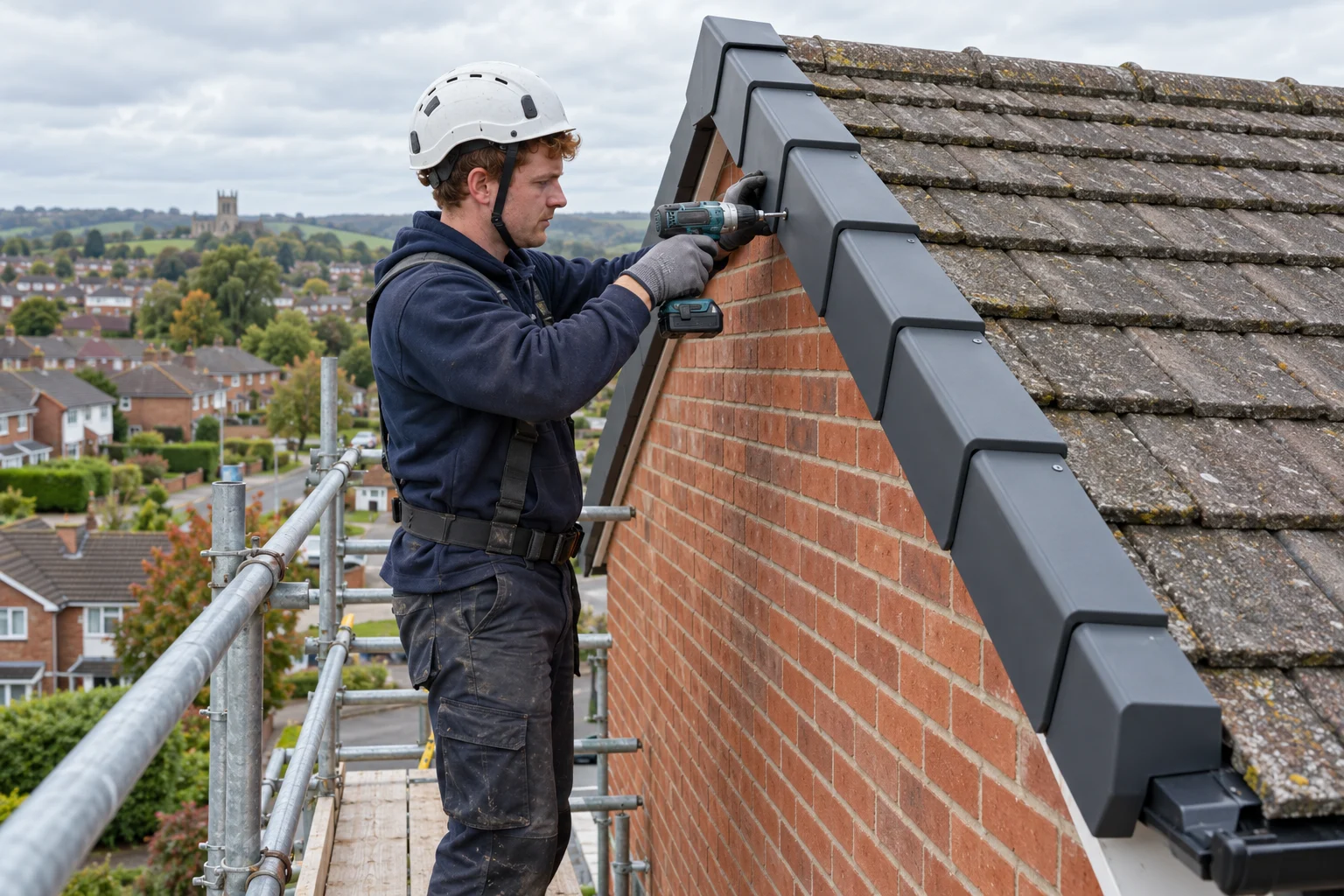
A dry verge replaces the mortar with caps that are fixed to the roof using screws or clips. The caps sit neatly along the edge and help hold the outer tiles down. Because there is no mortar to crack, there is no repointing to worry about. You can read more about the parts that make up these systems in our guide to dry verge capping systems.
A typical job follows a clear set of steps:
- We check the whole length of the verge, including the tiles, the undercloak and the bargeboards.
- We carefully remove the old mortar and any loose or damaged material.
- We repair or replace the support under the edge so that it is solid and level.
- We fix the new caps and end pieces securely, so that wind cannot get underneath.
- We clear away all the old material and leave the roof edge tidy.
Before any work starts, it helps to have the roof looked at properly. A professional roof inspection shows what is really going on up there, so the repair matches the problem and not just the surface.
Choosing a dry verge system for your roof
No two roofs are the same, so the right dry verge system depends on your tiles, your roof pitch and the look you want. Most systems are made from uPVC and come in a range of colours and profiles. We always match the parts to your tile type, because mixing parts that do not belong together can leave gaps and weak points.
Here is how the two main options compare in everyday use:
- Mortar verge: it gives a traditional look, but it can crack, erode and need repointing over the years.
- Dry verge: it gives a neat, even finish and needs far less ongoing attention, as long as it is fitted correctly.
Dry verge is low-maintenance, but it is not a fit-and-forget miracle. Fixings must be sound, the end closures must be in place, and the support under the edge must be in good shape. A badly fitted system can fail just as a mortar one can, which is why the quality of the fitting matters so much.
Older homes need a little extra thought. Some properties look best with a traditional mortar edge, and a few are listed or sit in a conservation area. If that sounds like your home, it is wise to check with Wrexham County Borough Council before changing the look of the roof. Like-for-like repairs are usually simple, but it is better to ask first.
Acting early also saves money and stress. As we explain in our article on how small roof issues grow into big ones, a loose tile or a patch of missing mortar today can turn into water damage next winter. We have also written about similar work nearby, in our guide to dry verge installation in Whitchurch, if you would like to see how the process looks across the border.
Planning your dry verge installation Wrexham project
Every roof edge is different, so we look at a few things before we give you a clear price and a plan:
- The total length of the verge, including both sides of a gable.
- Whether the damage is in one small spot or runs along the whole edge.
- The condition of the tiles, slates and the support beneath them.
- The height of the building and the safest way to reach the roof edge.
- The state of the bargeboards and the rest of the roofline.
Access can make a real difference. A tall gable may need scaffolding, while a low garage or extension may be simple to reach. A good roofer will explain this in plain language and show it in the quote, so there are no surprises later.
Choosing who does the work matters just as much as choosing the system. A reliable roofer will inspect the whole verge, give you a written quote, work safely and explain what they are doing. Ask about insurance, ask about guarantees, and ask for a clear breakdown of what is included.
While we are at the roof edge, we also keep an eye out for other trouble spots. A cracked chimney stack or loose flashing can sit just a few tiles away from a failing verge. If you have noticed problems higher up, our homeowner guide to chimney repair explains what to look for. If you have spotted damp marks inside, our advice on roof leak repair shows how to stop water damage early. Sorting several jobs in one visit can save time and the cost of putting up access twice.
One last tip: please do not try to push loose verge tiles or caps back into place from a ladder. Loose material can shift without warning, and it is not worth the risk. Leave it to a trained roofer who has the right equipment.
FAQs
Is a dry verge better than a mortar verge?
For most homes, a dry verge needs less upkeep because there is no mortar to crack or fall away. Mortar can still suit some older or traditional properties, so the best choice depends on your tiles, your roof and how you want the house to look.
Can a damaged verge be repaired in sections?
Sometimes, yes. If most of the verge is secure, a small section can be repaired on its own. If the mortar is failing along most of the gable or the support underneath is damaged, replacing the whole edge is usually better value than repeated patching.
Will I need scaffolding for a dry verge installation?
It depends on the height of your home, the pitch of the roof and the length of the verge. Smaller roofs may be reached another safe way, but the roofer must be able to work safely. Any access costs should be clear in your quote.
Contact Williams Roofing for Reliable Dry Verge Installation in Wrexham
A crumbling gable edge will not fix itself, and it usually gets worse in wet and windy weather. A mortar-free dry verge gives you a neat, secure roof edge with far less upkeep, as long as it is chosen well and fitted properly. Checking the whole verge, planning the access and using matching parts are the keys to a result that lasts.
If you are ready to talk about dry verge installation Wrexham homes can depend on, we would love to help. Simply contact us to tell us about your roof, and the friendly Williams Roofing team will talk you through your options.