A drip in the ceiling never arrives at a good time. If you need roof leak repair Shrewsbury homeowners can trust, we are here to find the cause, stop the water and put things right. At Williams Roofing, we want you to feel calm and in control, so this guide explains what to do first, what usually goes wrong and what a proper repair looks like.
Roof leak repair Shrewsbury homeowners can rely on
The first thing to know is that the stain on your ceiling is rarely right under the hole in your roof. Water runs along timber, felt and brickwork before it finally drips into your home. That is why guessing is risky. A quick dab of sealant in the wrong spot can hide the problem for a few weeks, then the leak comes back, and the damage gets worse.
When we look at a leak, we follow a simple three-step approach:
- We inspect the roof and the loft to trace the water back to where it gets in.
- We explain what we found in plain English, along with the repair options.
- We repair neatly and check that the area is watertight.
Our roof repair service covers pitched roofs, flat roofs, chimneys and the lead details around them. We always aim to repair when a repair is the sensible choice, so you do not pay for more than your roof needs.
Timing matters too. Damp loft timber, soggy insulation and stained plaster all get worse the longer water keeps coming in. If you can see signs of a leak, it is far better to book a roof repair before leaks cause internal damage than to wait for the next big storm.
What to do while you wait for an emergency roof repair
Heavy rain and strong wind can turn a small problem into a crisis very quickly. While you arrange an emergency roof repair, there are a few safe things you can do to limit the mess:
- Find where the water is coming in, then put a bucket or bowl underneath. Empty it often so it does not overflow.
- Move furniture, rugs and electrical items away from the wet area.
- If a ceiling is bulging with water, ask an adult to make a small hole in the lowest point so it can drain into a bucket. Stand clear while it empties.
- Take clear photos of the damage. They help us understand the problem and are useful for insurance too.
- Switch off the power to any room where water is near lights or sockets.
- Call a roofer rather than climbing up yourself.
Please stay off the roof. Wet tiles and slates are very slippery, and a fall is far more serious than a leak. A professional has the right ladders, harnesses and training to work at height safely.
It also helps to know what good service looks like. Our guide on what to expect from a reliable roofer explains the questions to ask and the signs of a safe, professional team.
Common causes we find when fixing a leaking roof
Every roof is different, but the same culprits turn up again and again. Knowing them can help you spot trouble early.
- Slipped, cracked or missing tiles. Wind and frost can loosen tiles and slates. Even one gap lets rain reach the felt underneath.
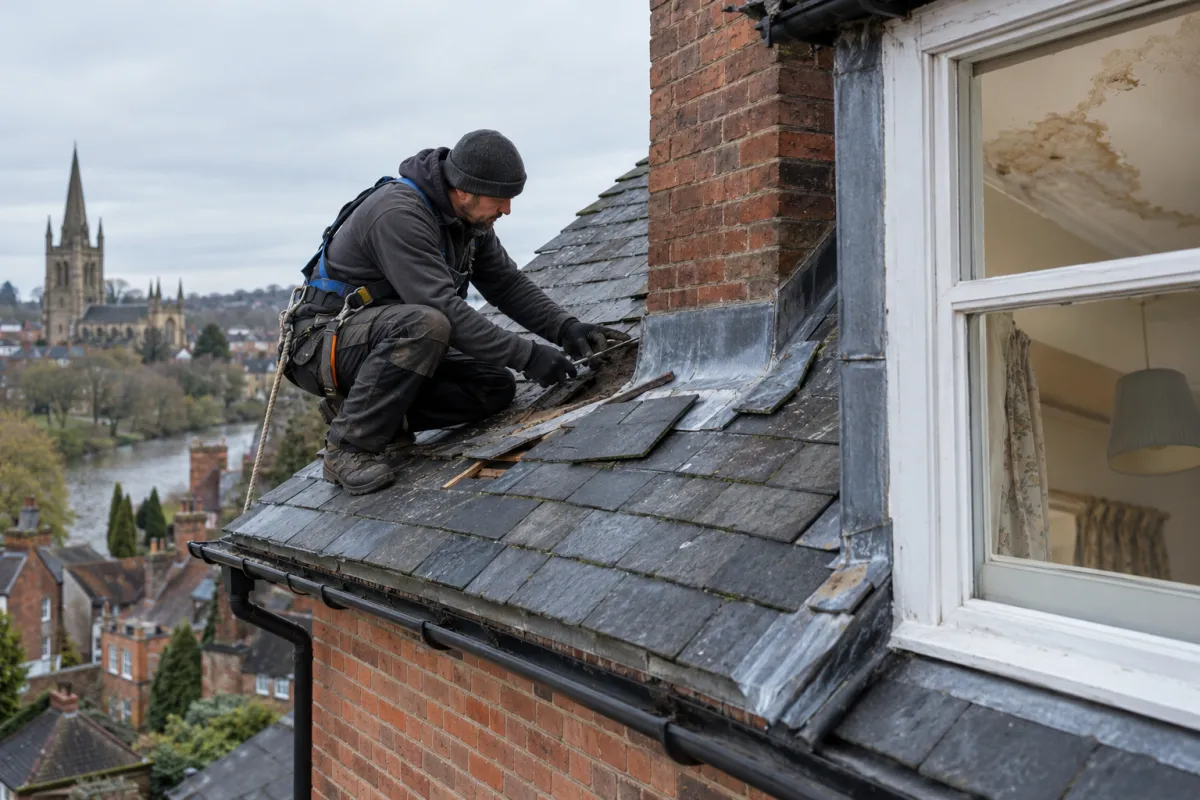
- Worn flashing and leadwork. These are the strips of metal that seal the joins around chimneys, walls and roof windows. When they lift or crack, water slips behind them.
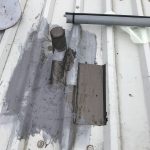
- Flat roof problems. Felt, rubber and fibreglass roofs can split, blister or pool water. Small splits often start at the edges and seams.
- Chimney trouble. Crumbling mortar, damaged flaunching and failing lead around the stack are classic sources of leaks.
- Blocked gutters and moss. When water cannot drain away, it backs up under the tiles and soaks the fascia and walls.
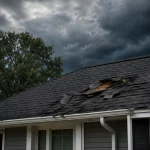
- Storm damage. Strong gusts can lift ridge tiles and strip away edges, leaving the roof open to the weather.
Sometimes the cause is not obvious from the ground. A professional roof inspection checks the whole roof, not just the spot that is dripping, so hidden weak points are found before they turn into leaks.
We also know that a home is more than a roof. Our residential roofing services are built around lasting results for families, not quick fixes that fail after the next downpour. That means using sound materials, tidy workmanship and honest advice.
One more thing worth knowing: a leak does not always mean a whole new roof. Most leaks come from a small area, such as a broken tile or tired lead, and can be fixed without replacing everything. If the roof is worn out across the board, we will say so clearly and talk you through the choices.
FAQs
Can a leaking roof be repaired, or does it need replacing?
In most cases, a repair is enough. A leak usually comes from something small, like a loose tile, split felt or worn flashing. A full replacement is only needed when the whole roof has failed or is unsafe. We survey the roof first, then give you honest options.
Should I stay at home if my roof is leaking?
Usually yes. Most leaks can be managed with buckets and by moving belongings out of the way. The exception is when the roof or ceiling looks structurally unsafe, or water is near electrics. If you are worried, switch off the power to that room and get advice straight away.
Can I fix a roof leak myself?
You can limit the damage inside, but the repair itself is best left to a roofer. Working at height is dangerous, and a poor patch often lets water back in. A proper fix finds the true source of the leak and seals it in the right way.
Stop Roof Leaks Early Before They Cause Bigger Problems
A leaking roof is stressful, but it does not have to stay that way. Act early, keep the water under control inside, stay off the roof and get the cause properly traced. Small repairs done promptly cost far less than damp ceilings, rotten timber and repeated call-outs.
At Williams Roofing, we are ready to help you find the leak, explain the fix and get your home dry again. Tell us what is happening, and we will guide you from there. Contact us today to arrange a roof check and take the worry out of the next rain shower.