
Heavy rain in Crewe can turn a small roofing weakness into a real problem inside your home. If you have noticed damp patches, dripping sounds, or stains spreading across your ceiling after a storm, you are not alone. Many homeowners across the area face the same worry once the rain clears and the damage becomes obvious. This article looks at what a leak after wet weather usually means, why it happens, and what steps to take next.
Why a roof leaking after heavy rain in Crewe is so common
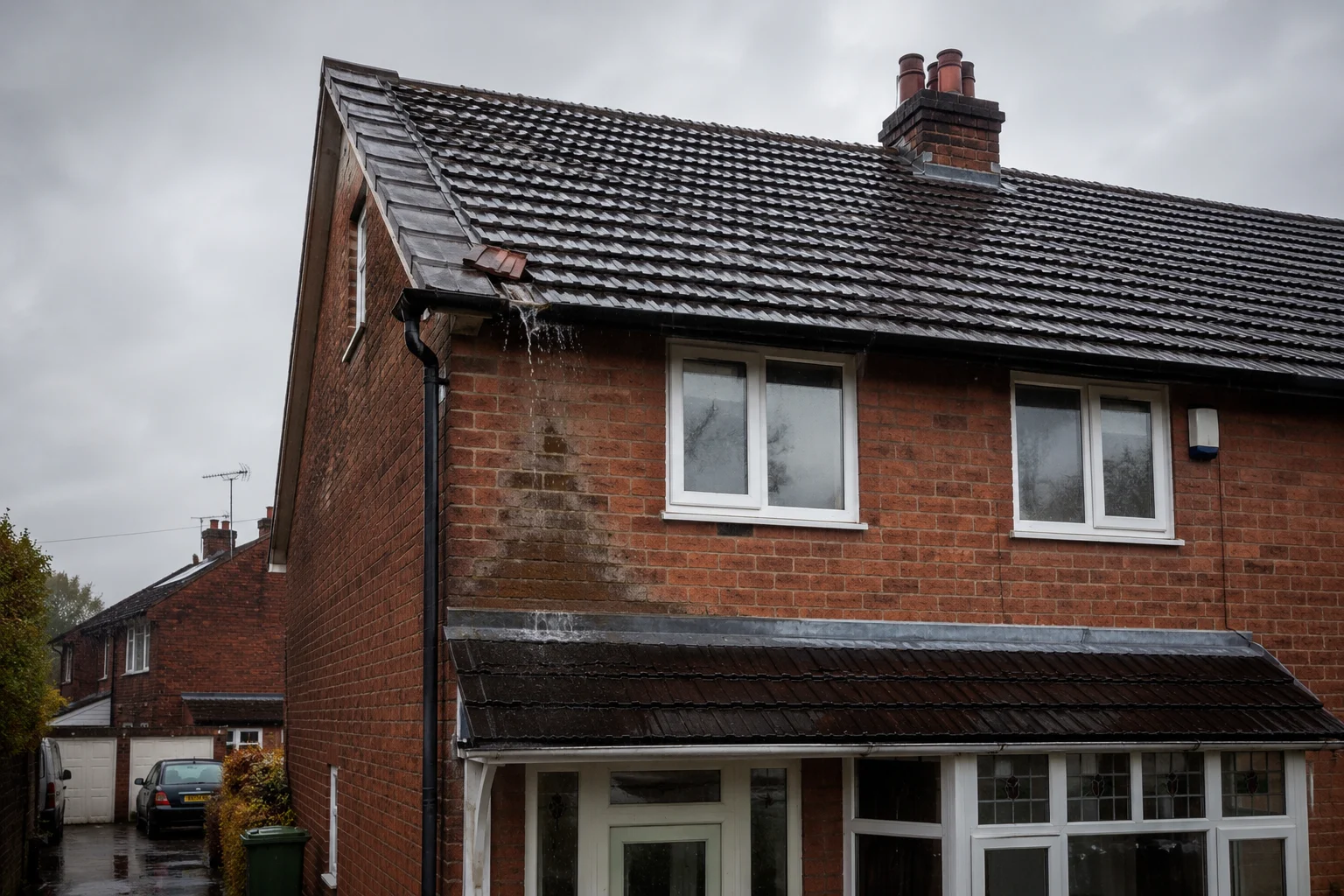
Rain does not usually cause a leak on its own. It exposes weak spots that were already there. A roof might look fine on a dry day, but heavy rain finds every gap, crack, or worn seal within minutes. This is why so many people only notice a problem during or right after a storm. Water travels along the path of least resistance, so a leak inside your bedroom might actually start somewhere completely different on the roof.
Crewe gets its fair share of wind-driven rain, and that combination is tough on roofs. Wind pushes water sideways and upwards under tiles and flashing that would normally stay dry. Over time, this weakens materials that were never designed to cope with water pressure from that angle. A professional roof inspection can often spot these weak points long before they turn into a leak that ruins your ceiling.
Common causes behind a leak
There are several usual suspects when it comes to roof leaks after wet weather. Understanding these can help you explain the problem clearly if you ever need to call a roofer out.
Cracked or slipped tiles are one of the biggest causes. A single tile out of place creates a direct gap for water to enter. Wind during storms often loosens tiles that were already sitting slightly wrong, and heavy rain then pushes water straight through the gap.
Damaged flashing is another frequent cause. Flashing is the metal strip that seals joints around chimneys, vents, and where two roof sections meet. It is a common weak point because it relies on a tight seal that can crack or lift over time.
Blocked guttering also causes plenty of leaks. When gutters are full of leaves or debris, rainwater cannot drain away properly. Instead, it backs up under roof edges and finds its way inside. This is one of the simplest problems to prevent with regular clearing.
Poor previous repairs can be a hidden cause too. If a roof has been patched up before using the wrong materials or a rushed method, that patch often fails the moment heavy rain puts it under pressure.
What roof leaking after heavy rain Crewe could mean for your home
A leak is never just about a wet patch on the ceiling. Water that gets into your roof space can travel a surprising distance before it shows up as a stain. This means the visible damage inside your home might only be a small part of the actual problem hiding above it.
Left unchecked, damp timber inside a roof can start to rot. Insulation can become soaked and lose its ability to keep your home warm. In some cases, water can even reach electrical wiring, which creates a genuine safety risk rather than just a repair job. This is why we always recommend getting a leak checked quickly rather than waiting to see if it dries out on its own.
Mould growth is another concern. Damp conditions inside a loft or wall cavity are perfect for mould, which can affect air quality and, in some cases, cause health issues for people living in the home. Spotting the signs early and dealing with the source of the water is far better than trying to treat mould after it has spread.
Signs you should never ignore
Some warning signs are easy to miss until they become serious. Watch out for a musty smell in a room or loft space, as this often means moisture has been sitting there for a while. Yellow or brown stains on ceilings are a clear sign that water is getting through somewhere above. Peeling paint or bubbling wallpaper can also point to hidden damp behind the surface.
If you notice sagging areas on your ceiling, this can mean water has been collecting for some time, and the material is struggling to hold the weight. This is one of the more urgent signs, since a heavy, saturated ceiling section can eventually give way.
What to do if your roof leaks during or after a storm
The first step is always safety. If water is coming through a light fitting or near anything electrical, turn off the power to that area straight away. Place a bucket or bowl under the drip to catch water and protect your flooring, and move any furniture or belongings out of the way if you can.
Try to note where the water is coming from, and roughly how much is coming through. This information is genuinely useful for a roofer, since it helps them work out where the source of the leak might be before they even climb up to look.
Once the immediate mess is under control, it is worth arranging an inspection rather than trying to fix things yourself, especially with tiles or flashing involved. Roof work carries real risks if you are not trained and equipped for it. A reliable roofer working safely will know exactly how to assess the damage without causing further problems.
Many leaks are actually linked to windows rather than the main roof structure itself, particularly around dormer windows or skylights. If your leak seems to be coming from near a window rather than the open roof, it is worth looking into leaking roof and window repair options, since the fix here can be quite different from a standard tile replacement.
Why quick action matters
The longer water sits inside a roof structure, the more expensive the repair tends to become. A small tile replacement job can turn into a much bigger project if timber has rotted or insulation needs replacing. Acting quickly after noticing a roof leaking after heavy rain in Crewe genuinely saves money in the long run, as well as protecting your home from further damage during the next storm.
We always suggest treating a leak as a priority rather than something to deal with once the weather improves. Storms in this part of the country do not tend to arrive one at a time, and a small gap left unrepaired will only get worse with each downpour.
Getting the right repair for a roof leaking after heavy rain in Crewe
Not every leak needs a full roof replacement. Many are fixed with a straightforward repair once the source is found. This might mean replacing a handful of tiles, resealing flashing, or clearing and repairing guttering. A proper roof repair carried out correctly the first time avoids the repeat problems that come from rushed or partial fixes.
At Evolution Roof Solutions, we look at the whole roof rather than just patching the obvious spot. This matters because a leak in one place can sometimes be a symptom of a wider issue, such as ageing materials across a large section of roof. Fixing just the visible symptom without checking the surrounding area can mean the same problem returns after the next heavy rainfall.
If you want to stop a leak becoming a bigger and more costly job, it helps to book a roof repair to prevent water damage before the next spell of bad weather arrives. Getting ahead of the problem is always simpler and cheaper than dealing with the aftermath once water has already spread through your home.
Prevention matters as much as repair
Once a leak has been fixed, it is worth thinking about how to stop the same issue happening again. Regular gutter clearing, checking loose tiles after windy weather, and having your roof looked at once a year can catch small issues before they turn into emergencies. This kind of simple maintenance is far cheaper than dealing with water damage inside your home.
We would always rather help homeowners prevent a leak than fix one after it has already caused damage. Keeping an eye on your roof, especially before autumn and winter storms roll in, makes a genuine difference to how well it holds up.
FAQs
How quickly should I get a leaking roof looked at?
As soon as you notice signs of a leak, it is worth arranging an inspection. Water damage tends to spread the longer it is left, so quick action usually keeps repair costs lower and stops further damage to timber, insulation, and ceilings.
Can I repair a small roof leak myself?
Small temporary fixes, such as placing a bucket under a drip or moving belongings, are fine to handle yourself. Actual roof repairs, including tile replacement or flashing work, are best left to a trained roofer, since working at height and identifying the true source of a leak both carry real risks if done incorrectly.
Why does my roof only leak during heavy rain?
This usually means there is a small weak point that only lets water through under pressure, such as during wind-driven rain. Light rain might not reach the gap, while heavy rain pushes water through it easily, which is why the problem seems to appear only during storms.
Will home insurance cover roof leak repairs?
This depends on your policy and the cause of the damage. Sudden storm damage is often covered, while gradual wear and tear usually is not. It is worth checking your policy details and getting a written report from a roofer to support any claim you make.
Stop Roof Leaks Before the Next Crewe Downpour
A roof leaking after heavy rain in Crewe is rarely just bad luck. It usually points to a specific weak spot that has been building up over time, whether that is a loose tile, damaged flashing, or blocked guttering. Spotting the signs early and acting quickly makes all the difference to the cost and scale of any repair needed.
If you are dealing with a leak right now or simply want peace of mind before the next storm hits, get in touch with our team through our contact us page, or head to our homepage to see how Evolution Roof Solutions can help protect your home for the seasons ahead.